






Background:
Over the past few years, global manufacturers have been rethinking their reliance on China as a single production base. China’s dominance as the “world’s factory” (accounting for ~30% of global manufacturing) is now challenged by rising costs, geopolitical tensions, and supply chain shocks . Factors such as the U.S.–China trade war (with unpredictable tariffs on Chinese exports), higher Chinese labor wages, and even disruptions like China’s strict COVID lockdowns have prompted companies to seek alternate manufacturing hubs . This strategy, dubbed “China+1,” means companies keep production in China plus expand into at least one other country to spread risk . The goal is to ensure that any one country’s issues (be it tariffs, politics, or pandemics) don’t completely derail a company’s supply chain.
Global Shift in Motion:
What started slowly over the last decade has become a full-blown trend. Early adopters were Japanese firms shifting parts of their production to Vietnam, India, Thailand, and Bangladesh after events like the SARS outbreak . Now, many Fortune 500 companies are pursuing China+1. For example, tech giants like Apple Inc. have instructed key suppliers (Foxconn, Pegatron, Wistron, etc.) to expand assembly lines in India and Vietnam to reduce overdependence on China . Major apparel brands, electronics makers, and even pharmaceutical companies are investing in alternate facilities across Southeast Asia and India, attracted by these regions’ growing manufacturing capabilities. According to a report by the Indian government’s NITI Aayog, India is increasingly seen as an attractive destination for companies looking to shift manufacturing out of China, thanks to its large workforce and government initiatives like “Make in India” . While countries like Vietnam and Thailand have so far been big beneficiaries (owing to very low labor costs and business-friendly tax laws) , India is rapidly ramping up infrastructure and incentives to capture a bigger slice of the pie. The opportunity is immense: diversifying supply chains not only mitigates risk but can also reduce costs and lead to more resilient operations in the long run.
Our Firsthand Experience:
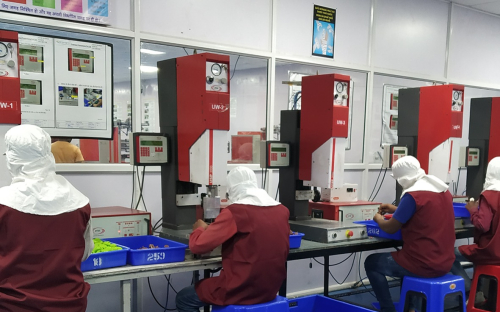
At Pramara, we have witnessed the China+1 boom up close. As a trusted India-based manufacturer and sourcing partner, we’ve been approached by numerous global clients seeking to shift or split their production away from China. In the last couple of years, our order books have grown with requests for all kinds of projects – from OEM manufacturing of consumer goods, to white-label production for international brands, to bespoke promotional merchandise for Fortune 500 companies – all to be produced out of our facilities in India. These clients cite familiar reasons: they want to diversify their supply chain, control costs, and avoid putting all eggs in one basket. We’ve ensured that when they choose us as the “+1”, they don’t have to compromise on quality or reliability. For instance, one electronics client moved a line of promotional gadgets to our production – we delivered units at 10% lower cost than their China supplier, while meeting strict quality benchmarks. In another case, a global FMCG brand chose us to manufacture a range of collectible toys for a marketing campaign once done in China; our agile process meant we could deliver on a tighter timeline and navigate local Indian sourcing for materials, reducing dependency on slow overseas shipments.
Key Drivers of the China+1 Strategy:
- Geopolitical Risks: Tariffs and trade barriers (e.g. US–China trade war) made Chinese-made goods costlier . Companies hedge by having factories in friendlier locales.
- Rising Costs: China’s labor costs have surged with its economic growth, shrinking the cost advantage . Alternate countries offer cheaper labor or tax breaks.
- Supply Chain Resilience: Events like the pandemic revealed the danger of over-concentration. Diversification ensures one shutdown won’t halt global supply.
- Policy Incentives: Nations like India, Vietnam, and Indonesia are wooing manufacturers with incentives, special economic zones, and improved infrastructure to become that “+1”.
Outcomes:
The China+1 movement is no longer just a buzzword – it’s transforming global manufacturing. For companies, it has meant stronger supply chain resilience and often access to new consumer markets (setting up in India, for example, opens a gateway to sell more in India’s booming economy). For countries like India, it’s ushering in investments, jobs, and technology. At Pramara, our growth has mirrored this macro trend – we’ve expanded capacity and added new product lines to meet the influx of demand from clients diversifying away from China. By delivering successfully for these clients, we’ve proven that India can be a reliable manufacturing hub for the world, offering both cost competitiveness and quality. The need for dependable China+1 partners will only grow in the coming years, and we stand ready as a seasoned partner in this new supply chain landscape. The lesson from this success story is clear: diversification isn’t just a defensive move, it’s an innovation in itself – opening opportunities to reimagine supply chains for the better.


















3 Comments
John Doe
Donec id blandit felis. Aenean placerat sodales commodo. In sed odio at sapien consequat semper ac a elit. Nunc consequat ac tortor quis dignissim. Integer ac commodo elit. Donec finibus cursus tortor, et bibendum turpis interdum non.
Luke Carter
Sed porta tristique ex, vel iaculis lorem bibendum et. Donec iaculis arcu neque, at mattis nisi lobortis in.
Bob Brown
Aenean arcu metus, suscipit ac sagittis vel, varius vulputate purus. Vestibulum eget felis at ipsum suscipit elementum eget a nulla. Curabitur auctor dignissim vestibulum.
Comments are closed.